


Amber McLandrich is a Kindergarten teacher in Beaverton, Oregon. She and her teammate Bobbi Janssen introduce their students to inquiry through a study of the “critters” they can find right outside (and inside!) their classrooms. Thank you, Amber, for sharing how you and your students make the ordinary extraordinary.
For our other posts on outdoor learning, go here.
** This is a long (and fantastic) post- you can click “View Entire Post” to see it all, or read it in the Substack App.**
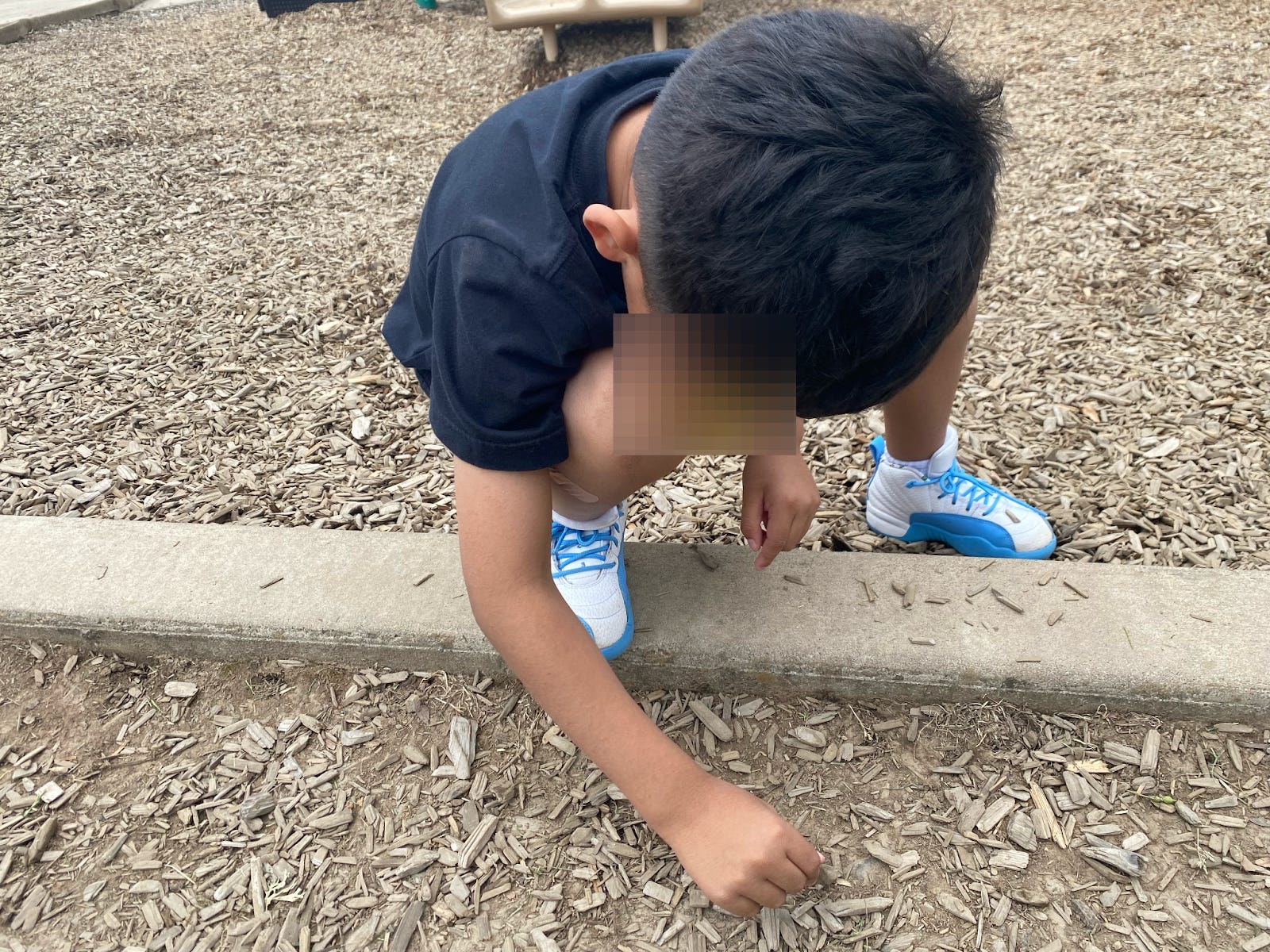
We begin our year by teaching students how to be “Curious Kids.”
We realized that student inquiry is most impactful in kindergarten when they are wondering about a tangible thing right in front of themselves. Our school grounds look like they wouldn’t provide much room for inquiry. It’s your typical building with grass, sidewalks, and some plants around it. We have a few trees. It backs up to a creek but there is a giant fence stopping access so the kids can’t get close.
However, we have found that even an everyday space like this is teeming with little critters that students LOVE to investigate.
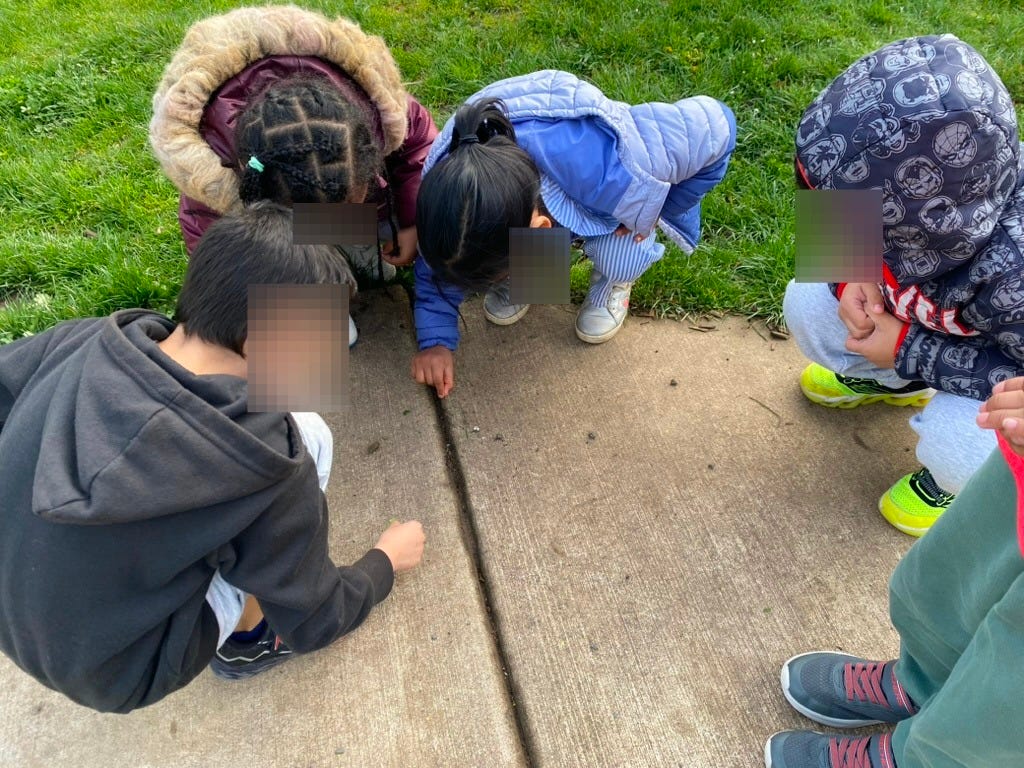
We have found ladybugs, ants, worms, pill bugs, slugs, snails, beetles, spiders, millipedes, and more just by teaching them to move aside dead leaves, lift up rocks, or simply get low to the ground and look closely.
A large portion of our students live in apartments. Our landscape is similar to what they have access to at their homes. This helps them see they can observe nature and be curious anywhere.
Our study of critters doesn’t even need to start outside. It doesn’t take long into the school year for a spider to crawl across the rug during a read aloud, causing a panic.
This is usually my first opportunity to say “Let’s study it!” This phrase “Let’s study it!” starts from me but becomes a common refrain from the students for the rest of the year.
I have little critter containers and cages and magnifying glasses ready so students can do observational drawings and ask questions when they see a critter. We learn more about the animal through observing the animal, looking at pictures, and reading books.
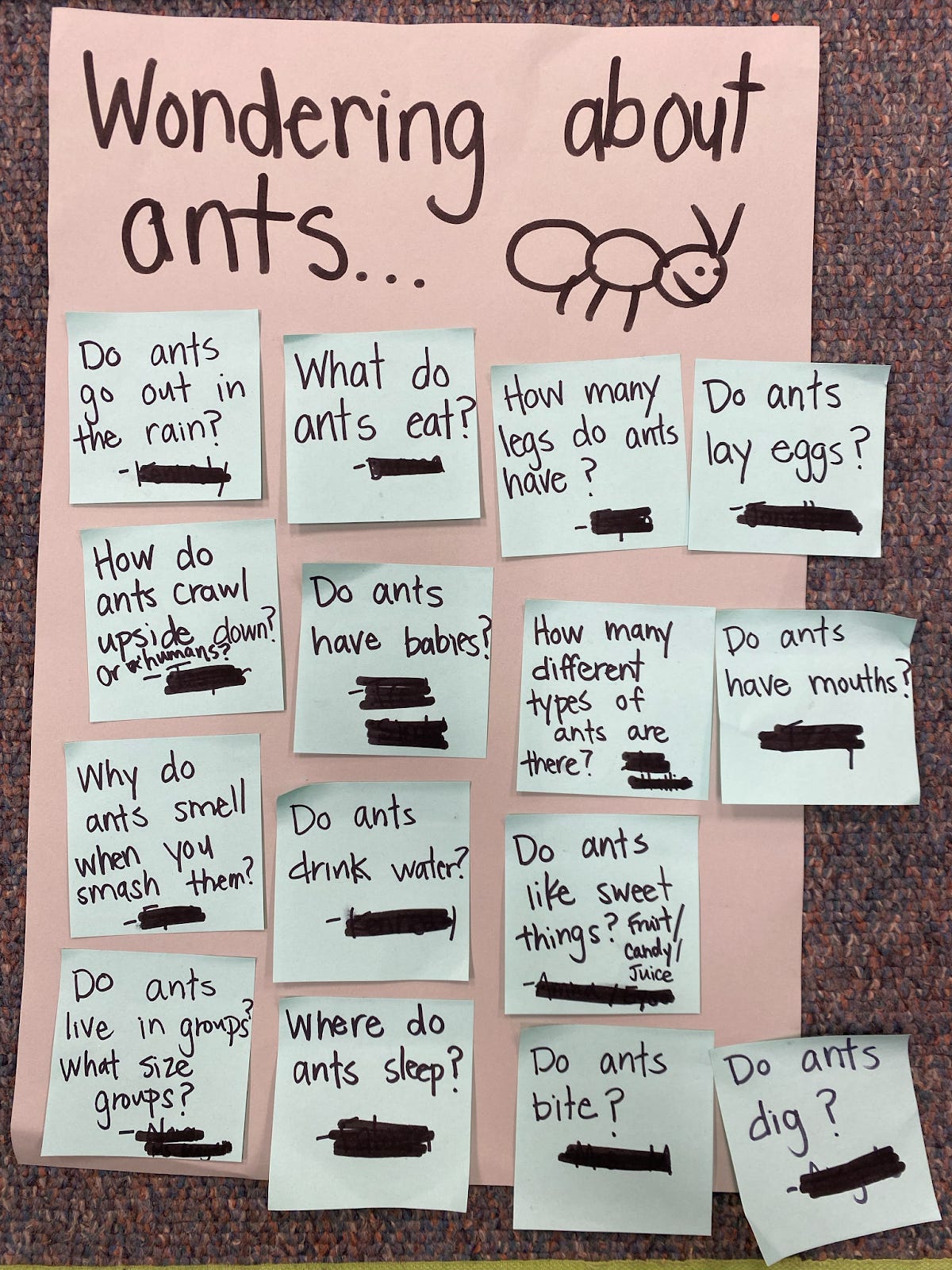
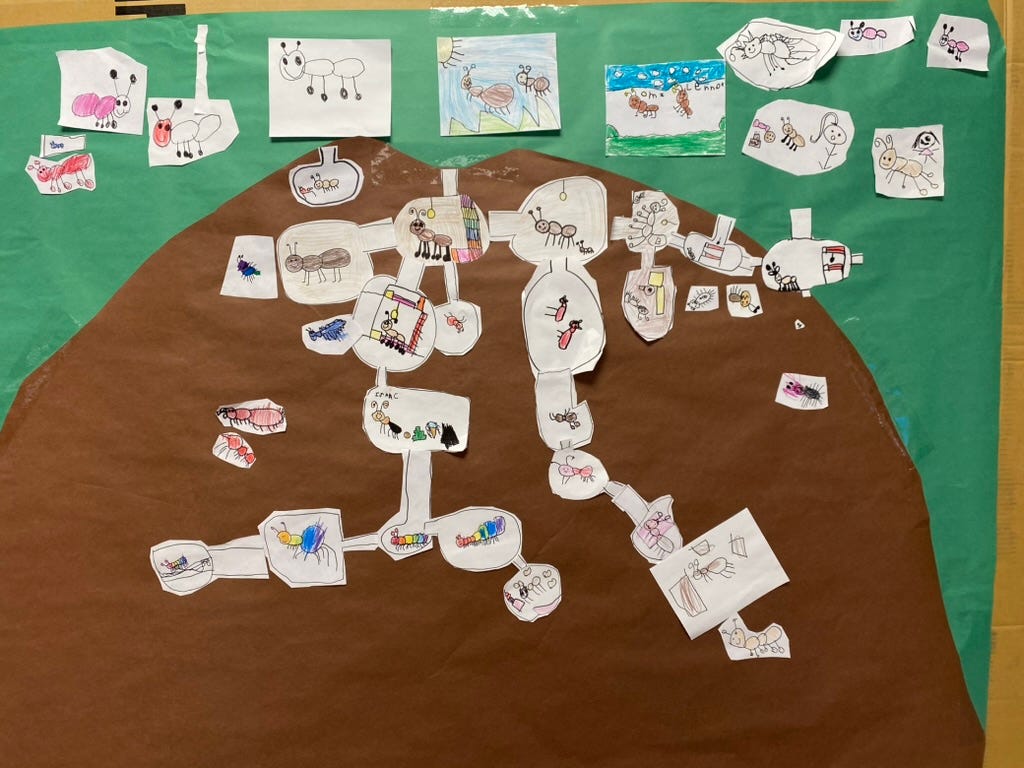
Students have a nature journal where they document their learning. There are times when we are all learning about an animal on the rug and other times when they are choosing to write in their journal about something they saw.


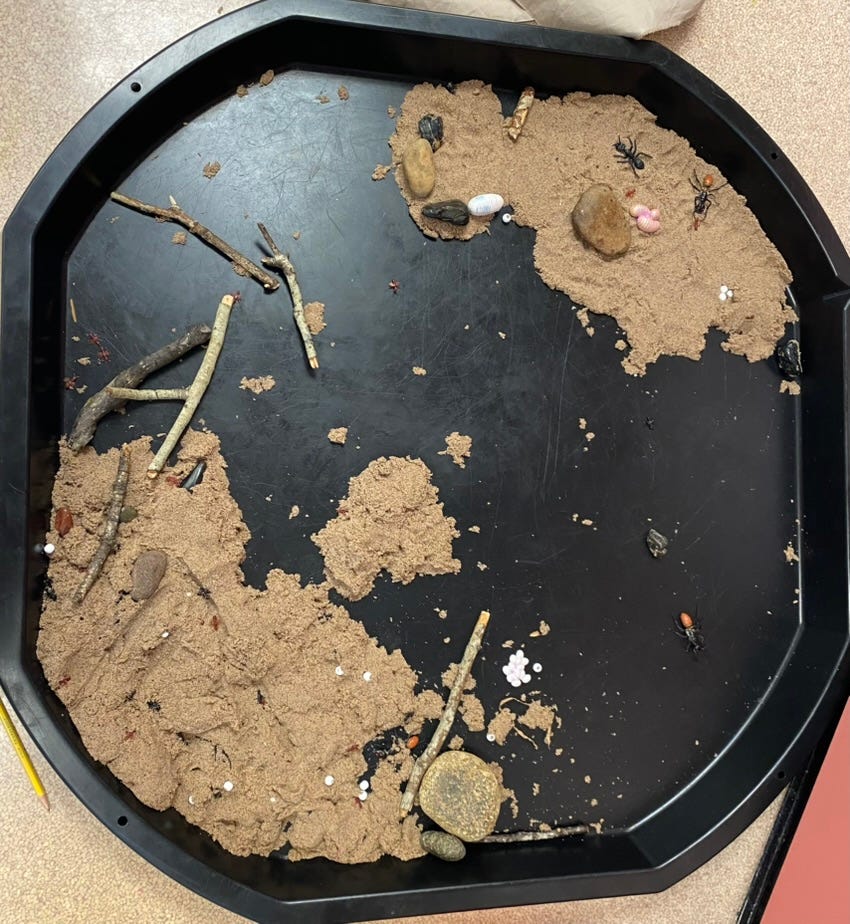
We usually make some kind of small world play so that students can act out what they learned during play workshop (we are now calling it Work Choice time thanks to the Taproots article.) We also allow students to bring out magnifying glasses to share with everyone during recess.
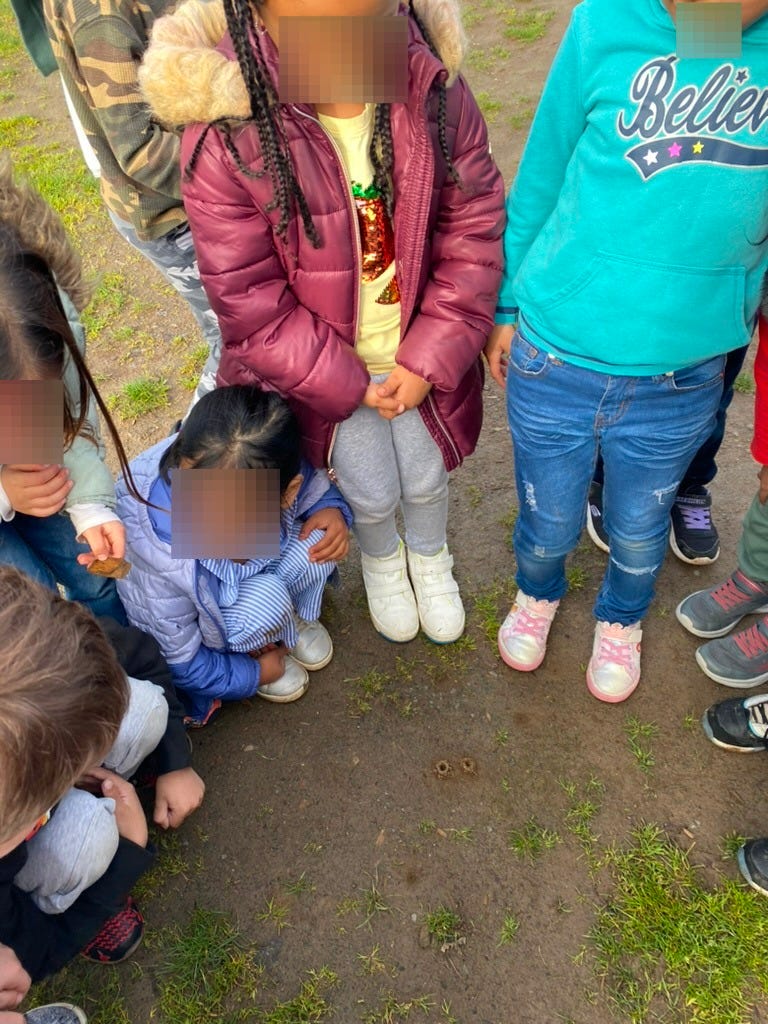
From there, it’s easy to make the jump to observe little critters they find outside. In rainy Oregon, worms are often on the playground. Students pick them up off the playground to save them.
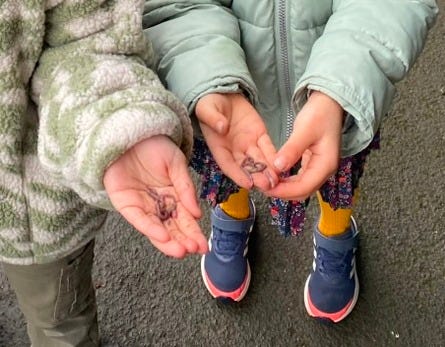
This leads to us making a worm jar. When the worms aren’t on the playground on dry days, they miss them and begin digging around the playground to look for them.
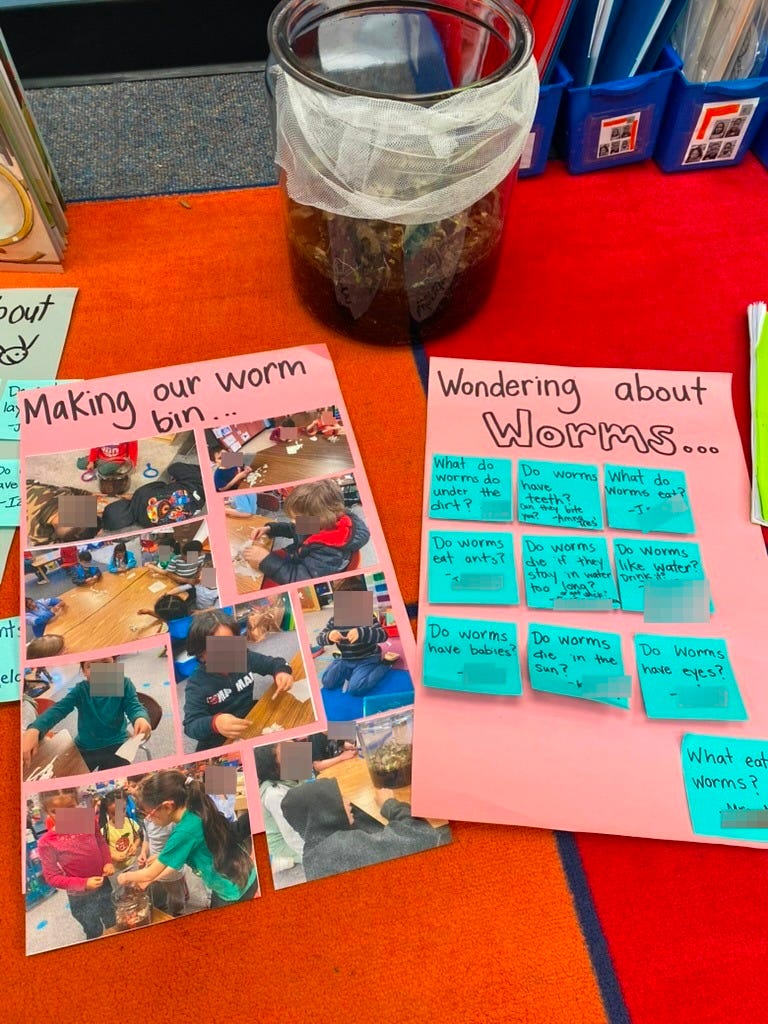
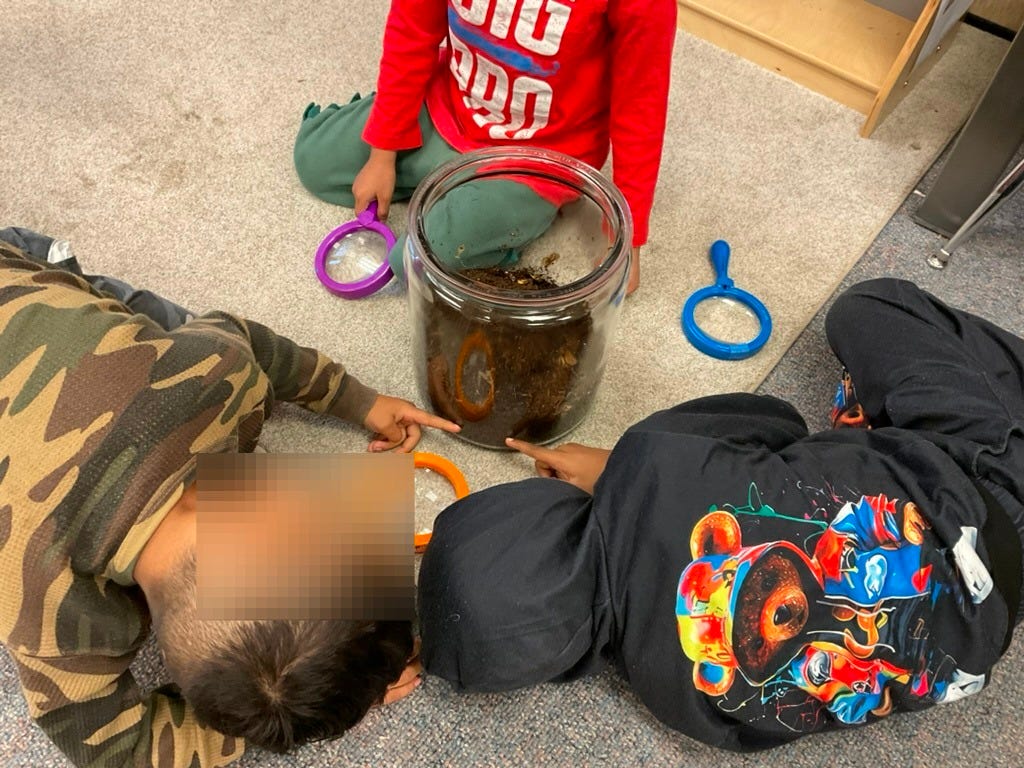
This digging leads to finding other bugs. The cycle just goes round and round.
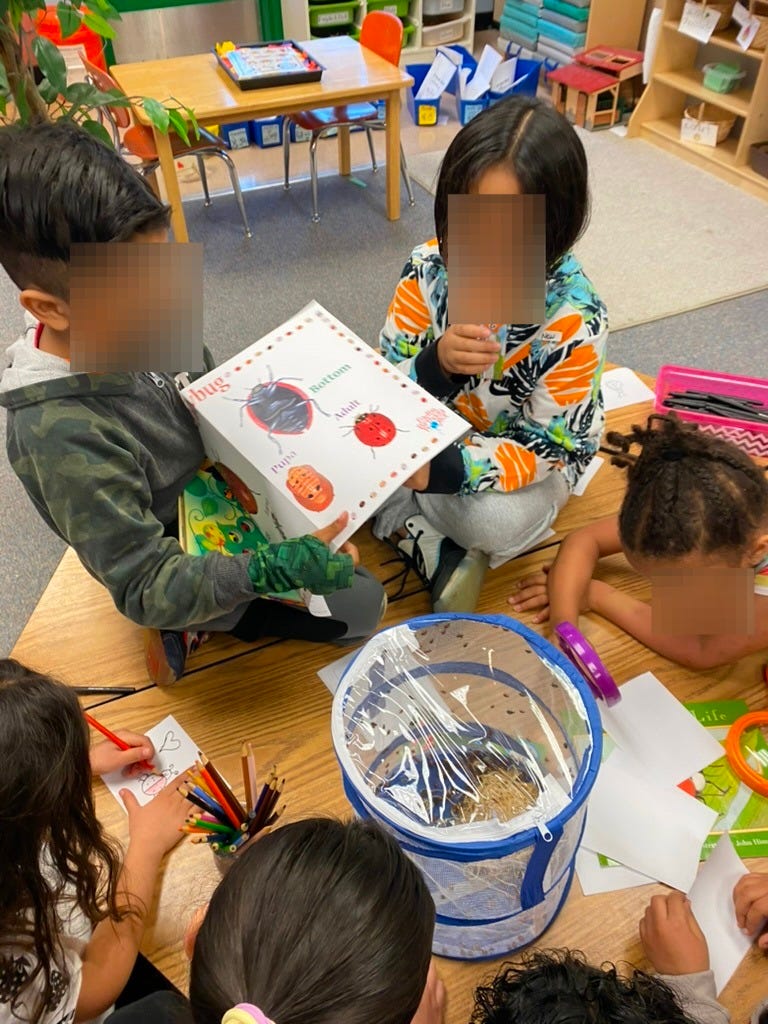
A kids yells, “I found a ______!” All the kids run to look at it and then they all start digging, turning over leaves, and searching for more.
Someone runs over to me and says “We need to study it!”
If it’s a bug I think we could bring inside for a short time, we put it in a little jar. Other times, I take an up close picture.
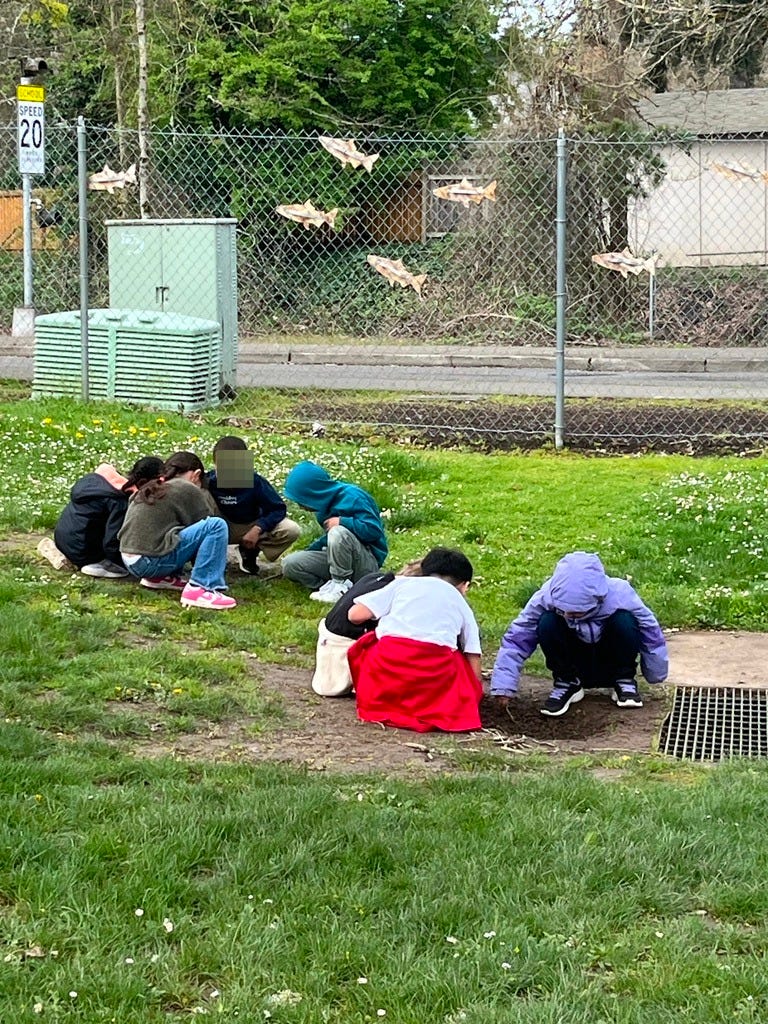
We have found that the students don’t need shovels to dig. They are happy to use sticks or even large bark chips they find around the playground. In fact, the fact that sticks are less efficient at digging than a shovel, encourages students to look closer for bugs rather than just making a giant hole (which has its benefits but we aren’t allowed to do for safety concerns.)
It’s magical to see heads together as they marvel over the smallest creatures that we usually walk by in our everyday lives without noticing.
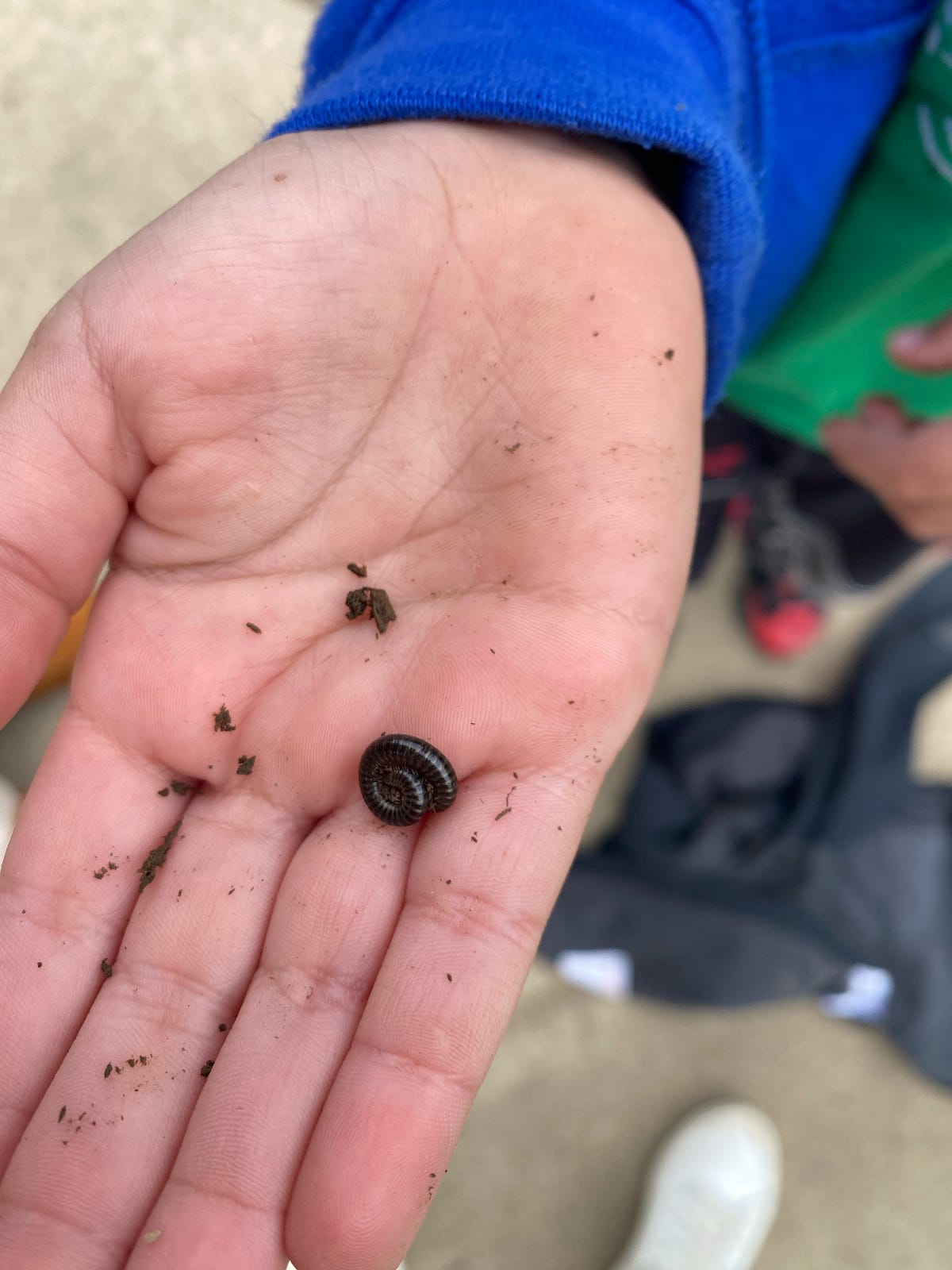
The skills they build are innumerable, however, I think the most amazing learning to come out of it is them saying to a friend in their free time (recess), that they found something cool in nature and they want to study it together. It’s authentic agency as they collaborate with peers to inquire further.
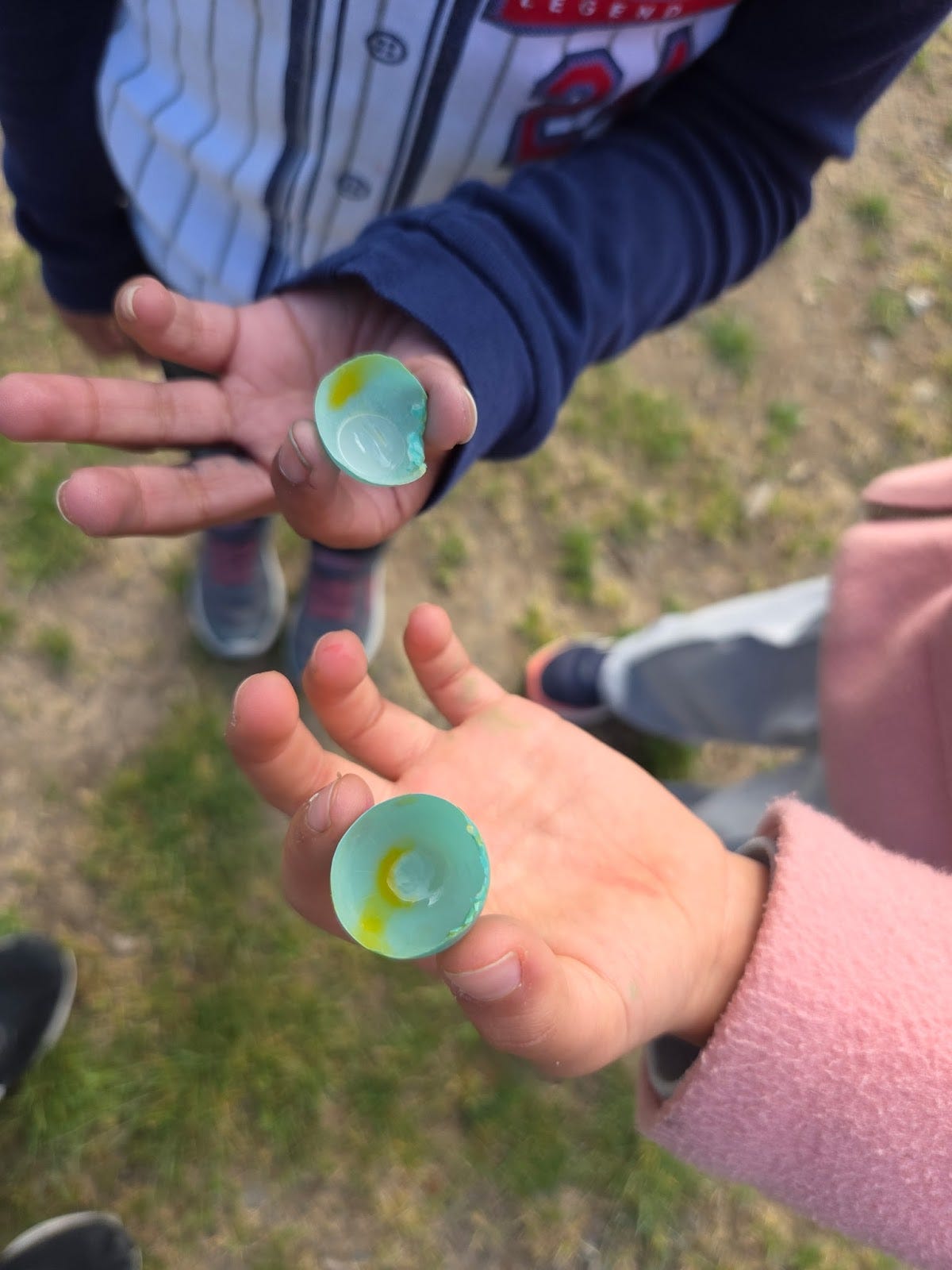
The only downside? Be prepared to take MUCH longer walking anywhere! They now find wonderment in every tiny bug we come across. We all have to stop and observe it for a bit before we can move on. It’s not uncommon for me to have to say “Sorry we are late, there was a pill bug on the sidewalk” to the music teacher when we show up.
Thank you, Amber! We are so grateful you shared your classroom (inside and out) with us.
I'd also like to see something like this planned out. In my district, we need to submit lesson plans, and I'd need to submit my units for approval if I don't use Creative Curriculum.
What a lovely classroom. Please share more about inquiry with kindergarteners. Do you have any sample "units" or tips for the planning process? I would like to try something like this with my kinder kiddies, but I'm not sure how to start (first year teaching!) Thank you for all you do to support us and help us learn.